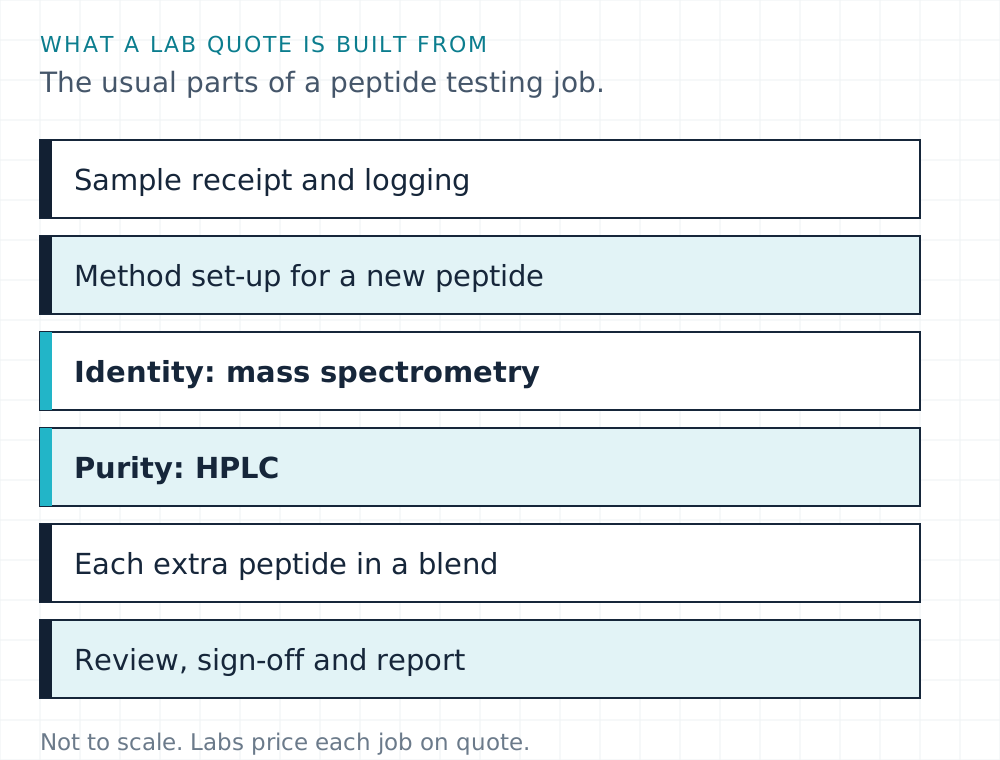
To test a peptide, you send the vial, or the part of it the lab asks for, to a laboratory that accepts samples like yours, with a form saying what the label claims; the lab runs identity and purity tests and sends back a written report for that sample. For an individual in Australia, the main decision is finding a lab that accepts personal samples, because most large analytical labs work only with business clients.
This report walks through the steps, what labs need from you, how to pack and post a sample and what to check when the report arrives. It does not cover using any substance.
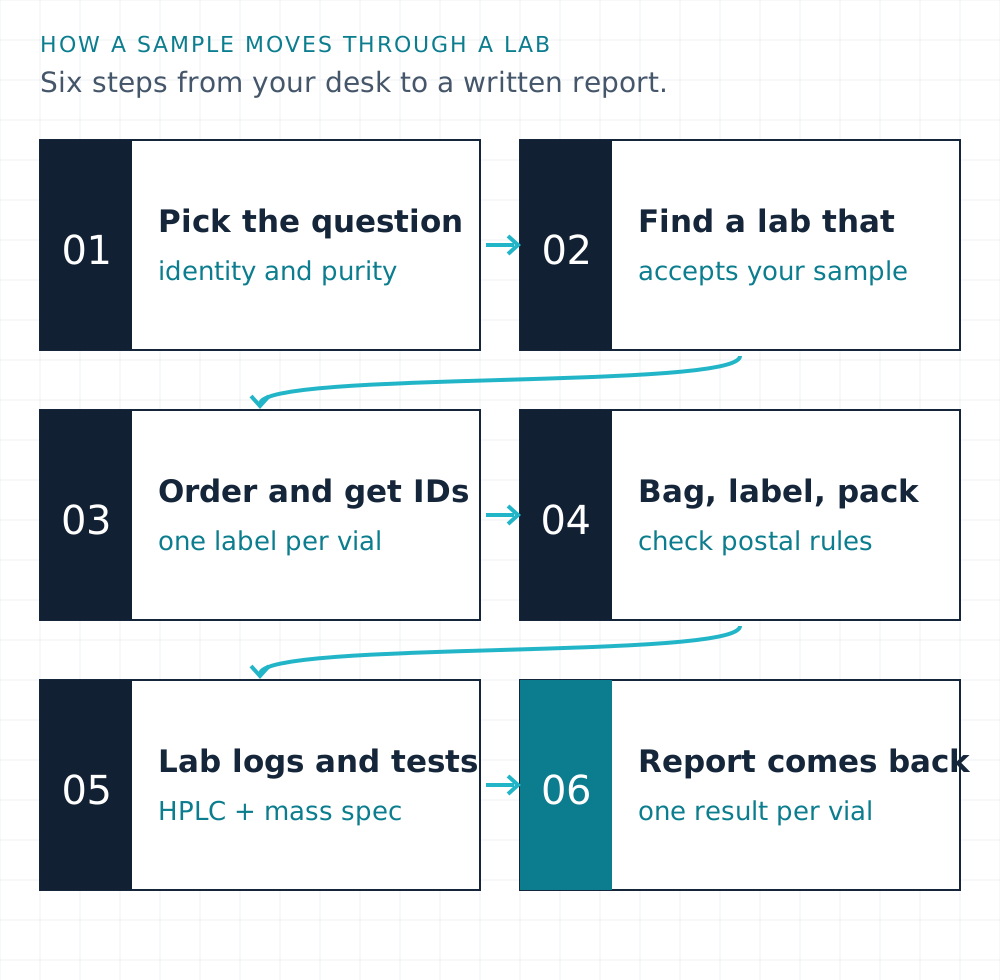
Step by step
- Write down what the label claims. Peptide name, stated amount, batch or lot number, and whether the vial holds one peptide or a blend. The lab compares its result against that claim.
- Decide what you want answered. Identity (is it the right peptide?), purity (how much of what is there is that peptide?), or both. Most personal-sample tests cover both; a blend needs extra analysis.
- Find a lab that accepts your sample. Check before you post. Chemika, for example, says it does not accept samples from members of the public (Chemika); most other large labs in our directory do not say either way.
- Order or request a quote, and get sample IDs. A lab needs to know a sample is coming and how to match it to an order. Ask for a unique ID for each vial.
- Bag and label each vial. One vial per sealed bag, with its ID written on the bag or the vial, so the lab cannot mix up samples.
- Pack and post. Use padded packaging and tracked post, and include any form the lab asks for.
- Keep a record. Photograph the vial and label before it leaves, and keep the tracking and order numbers together.
- Read the report. Check that the sample ID, methods, results and dates line up with what you sent.
What a lab needs from you
Labs work from paperwork as much as from the sample. ISO/IEC 17025, the standard most Australian testing labs are accredited to, covers the handling of test items and the reporting of results among its technical elements (NATA), so an accredited lab will want each sample identified and logged from the moment it arrives. Expect to give:
| Item | Why the lab wants it |
|---|---|
| Your name and contact details | So results reach the right person |
| What the label claims | The result is checked against the claimed peptide and amount |
| A unique ID per vial | Links each result to one sample |
| Whether it is a blend | A blend needs each peptide separated and identified |
| Whether the vial is sealed or opened | An opened vial may have been exposed to air or contamination |
An example: a personal-sample service
Peptide Testing Australia publishes its process. You order and pay online, receive an order form with a label for each vial, put each vial in its own zip-lock bag with its label written on the bag, and post them with the printed form in one Australia Post envelope. It says the ideal is to send the whole vial sealed, to avoid cross-contamination, but that opened or mixed vials are accepted too. Each vial is analysed for identity and purity, and the turnaround is approximately 5-7 business days plus postage. It accepts samples posted from within Australia only. Its step-by-step order page for posting a vial has the current details.
Packing and posting
Australia Post's Prohibited and Restricted Items List and Packaging Guide sets the rules for what can go through its network (Australia Post, March 2026). It prohibits controlled drugs, including Schedule 8 medicines, and sets conditions for posting other medicines and scheduled substances, including who the addressee may be. Read it before you post, and ask the lab how it wants samples sent.
The same guide notes that the Australia Post delivery network is not temperature controlled, so items may be exposed to extreme hot and cold temperatures during carriage. Post early in the week, avoid leaving a parcel in a hot letterbox or car, and use tracking so you know when it arrives.
Common mistakes
- Posting before the lab agrees. An unexpected parcel may be refused or returned, and some labs do not accept samples from individuals at all.
- Several vials in one bag. One leaking vial can contaminate the others, and the lab cannot tell which result belongs to which label.
- No record of the label claim. Without the claimed peptide and amount, a result has nothing to be compared against.
- Posting into a heatwave. The postal network is not temperature controlled, so plan around hot weather where you can.
- Sending sharps. Australia Post's guide lists used syringes and needles among prohibited items; send the vial only.
Testing does not change a product's status
Sending a sample for analysis does not make a product lawful or approved. The TGA says disclaimers such as "research use only" do not change whether a product is regulated as a therapeutic good, and that it has not assessed unapproved peptide products for safety, quality or effectiveness (TGA). The TGA has also warned that products failing import rules because of poor or unclear labelling can be seized at the border (TGA warning on importing unapproved peptide products). If you have questions about your own situation, ask a pharmacist, a doctor or a lawyer.
When the report arrives
- Match the sample ID on the report to the label you sent.
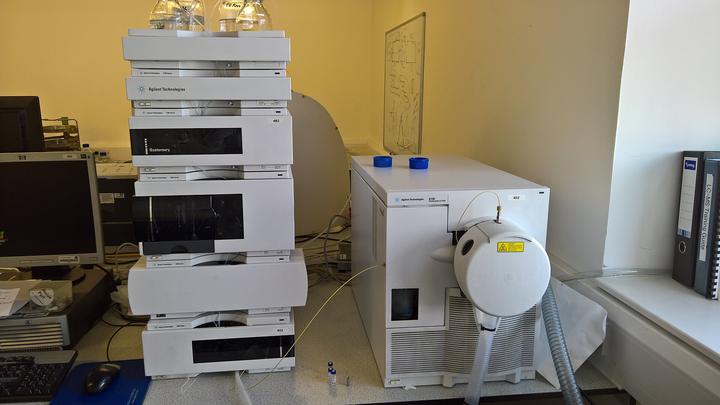
- Check that the methods are named: HPLC for purity, mass spectrometry (often LC-MS) for identity.
- Read the identity result first. If the observed mass does not match the expected mass, the purity figure describes something other than the peptide on the label.
- Then read the purity figure as a share of the detected peaks.
- Note the dates and who authorised the report.
Our guide to lab reports and accreditation lists what a complete report should include, and the HPLC report explains the purity figure.
Questions
Q.01How do I get peptides tested in Australia?
Choose a lab that accepts samples from individuals, order or request a quote, label each vial with its own ID, post it with any form the lab asks for, and read the report when it arrives.
Q.02Can I send an opened vial?
Some services accept them. Peptide Testing Australia says the whole sealed vial is ideal but opened or mixed vials are fine. Other labs set their own rules, so ask.
Q.03Can I send a sample from overseas?
Peptide Testing Australia accepts samples posted from within Australia only. For other labs, ask before sending anything across a border.
Q.04Can I drop off a sample in person?
None of the lab pages we checked describes a walk-in service for members of the public. Ask the lab directly; most personal-sample testing is done by post.